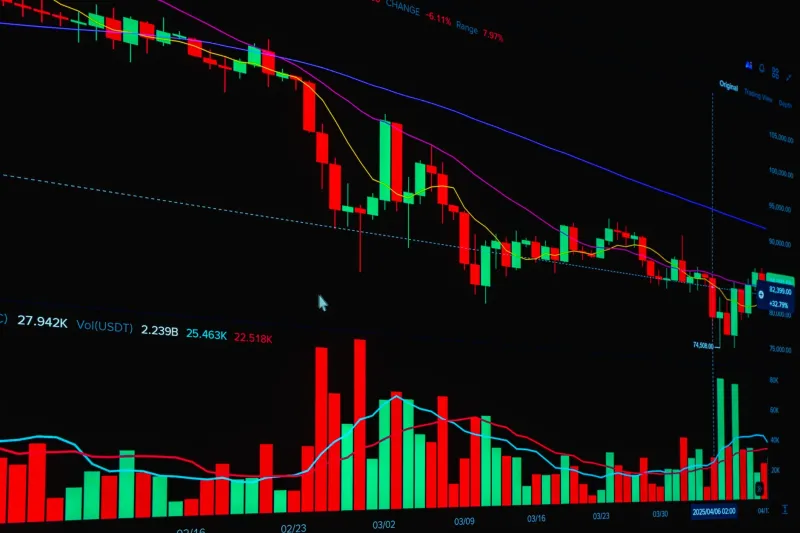
Surviving the Deep Freeze: A Professional's Playbook for Protecting Capital in a Crypto Bear Market

What the Data Says About Who Actually Survives
The 2018 crypto winter wiped out an estimated $700 billion in market capitalization over approximately twelve months. The 2022 bear market was more severe in absolute terms, erasing over $2 trillion from peak valuations and claiming several major institutional players along the way. In both cases, the investors who preserved the most capital—and captured the most upside in the subsequent recovery—shared a set of specific behaviors that had little to do with predicting the bottom.
They did not guess correctly when the market would turn. What they did was manage risk before sentiment collapsed, maintain liquidity when others were illiquid, and resist the psychological pressure to act impulsively at precisely the moments when impulsive action was most costly.
This playbook is designed to help you replicate those behaviors before the next downturn arrives—or to implement them systematically if one is already underway.
The First Priority: Capital Preservation Over Return Chasing
The foundational principle of professional bear market management is that not losing money is more valuable than making money during a downturn. This is not a platitude—it has a mathematical basis.
An investor who loses 50 percent of their portfolio requires a 100 percent gain simply to return to their starting point. An investor who loses only 20 percent needs just a 25 percent gain to recover. The asymmetry is significant, and it explains why institutional investors allocate considerable resources to downside protection rather than upside maximization.
For US crypto investors, capital preservation during a bear market typically involves three core mechanisms: reducing overall exposure, increasing the quality composition of remaining holdings, and maintaining meaningful cash or stablecoin reserves.
Reducing exposure does not mean exiting the market entirely. It means calibrating your position sizes to a level where a further 50 to 70 percent decline in asset prices—a historically plausible scenario in crypto—would not compromise your financial stability or force you to sell at the worst possible moment.
Bitcoin Versus Altcoins: Different Animals, Different Defenses
The bear market experience differs substantially between Bitcoin and altcoin holdings, and the appropriate defensive strategies reflect those differences.
Bitcoin has historically demonstrated shallower drawdowns than the broader altcoin market and has recovered more reliably from those drawdowns over multi-year periods. For investors with long time horizons, maintaining a core Bitcoin position through a bear market—provided position sizing is appropriate—has historically been defensible.
Altcoins present a fundamentally different risk profile. During the 2018 bear market, the majority of altcoins that existed at the peak did not recover to their prior highs in the subsequent cycle. Many ceased to exist entirely. In the 2022 downturn, the pattern repeated with notable additions: projects with significant institutional backing and established use cases still experienced 80 to 95 percent drawdowns.
The implication for altcoin holders is that bear markets demand active portfolio triage, not passive holding. The relevant questions for each altcoin position are: Does this project have a funded development team capable of operating through an extended downturn? Does it have genuine user activity that persists independent of token price? Does it have a credible narrative for the next market cycle? Positions that cannot answer these questions affirmatively deserve serious reconsideration.
Stablecoins and the Liquidity Advantage
One of the most consistent differentiators between investors who thrive in bear markets and those who merely survive is the deliberate maintenance of liquidity. Professional investors treat stablecoin reserves not as idle capital but as optionality—the ability to act when others cannot.
The practical value of this approach becomes apparent during the final stages of a bear market, when capitulation events create brief windows of extreme undervaluation. Investors who entered the downturn with meaningful stablecoin reserves can deploy capital at those moments. Investors who were fully invested at the peak are typically forced to sell into weakness to meet personal financial obligations, or to hold positions they cannot afford to average down on.
For US investors, stablecoin selection carries regulatory and counterparty considerations worth addressing. USDC, issued by Circle and subject to regular attestation, has demonstrated greater transparency than alternatives. Holding stablecoins across more than one issuer reduces concentration risk. Keeping a portion of reserves in regulated money market accounts or short-duration Treasury instruments provides both yield and regulatory clarity that on-chain stablecoins cannot guarantee.
The Psychology of the Downturn
No tactical framework survives contact with a prolonged bear market unless it is paired with psychological preparation. The emotional arc of a crypto winter follows a recognizable pattern: initial denial, followed by bargaining (averaging down prematurely), followed by despair, followed eventually by acceptance—often at or near the actual bottom.
Professional investors interrupt this cycle through pre-commitment. Before a bear market intensifies, they establish explicit rules for when they will and will not act: specific price levels or time intervals that trigger portfolio reviews, predefined position size limits that prevent emotional averaging, and written investment theses for each holding that can be evaluated against changing conditions rather than against price movements alone.
The written investment thesis is particularly valuable. When a position's price has declined 60 percent, the question should not be "should I sell because it's down?" but rather "has anything changed about the fundamental case I made for holding this asset?" Separating price movement from thesis validity is a discipline that requires advance preparation.
Identifying Genuine Buying Opportunities Without Catching Falling Knives
The most dangerous moment in a bear market is the one that looks like a bottom but is not. Multiple false recoveries typically precede genuine capitulation, and each one attracts buyers who subsequently experience further losses.
A practical framework for distinguishing genuine accumulation opportunities from bear market rallies involves three filters.
First, look for on-chain accumulation by long-term holders. When wallet cohorts associated with multi-year holding periods are net buyers, it represents more durable demand than retail speculation.
Second, monitor funding rates in perpetual futures markets. Negative or near-zero funding rates indicate that speculative leverage has been substantially cleared from the market—a structural precondition for sustainable recovery.
Third, evaluate the macro environment. Crypto bear markets that coincide with Federal Reserve tightening cycles have historically been more severe and prolonged than those occurring in accommodative monetary environments. Watching for a credible pivot in Fed policy provides a useful macro backdrop for timing accumulation.
None of these filters predict the bottom with precision. Their value is in reducing the probability of deploying capital into a declining market while providing a rational basis for beginning to build positions—gradually, with predefined limits—as conditions improve.
The Bear Market Checklist
Before the next significant downturn arrives, US crypto investors should be able to answer the following questions affirmatively:
- Have I sized each position such that a 70 percent further decline would not require forced selling?
- Do I hold meaningful stablecoin or cash reserves that I can deploy during capitulation events?
- Have I documented a written investment thesis for each altcoin position?
- Have I established explicit rules for when I will and will not make changes to my portfolio?
- Have I evaluated each altcoin holding's capacity to survive a two-year development runway without token price appreciation?
If any of these questions cannot be answered affirmatively, the work of bear market preparation is not yet complete. The time to complete it is before the sentiment collapses—not after.