Smarter Than the Market, Poorer Than the Index: Why Crypto Expertise Can Destroy Your Own Portfolio

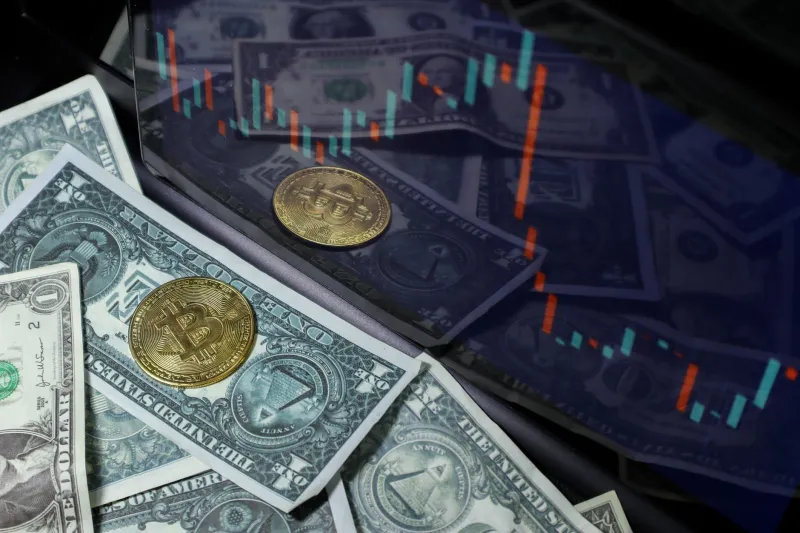
Photo: overconfident professional investor looking at cryptocurrency charts with declining portfolio, via http2.mlstatic.com
The Paradox Nobody in the Industry Wants to Discuss
There is a quietly uncomfortable truth circulating among veteran cryptocurrency professionals: many of the most credentialed analysts in the space have consistently underperformed simple, passive holding strategies when managing their own capital. The irony is not incidental. It is structural. The very cognitive architecture that makes someone an exceptional market commentator can make them a poor steward of their own wealth.
At Best Crypto Experts, we believe that understanding how expertise becomes a liability is as important as building expertise itself. For US investors who rely on professional guidance, recognizing these patterns can help you critically evaluate the advice you receive—and perhaps your own decision-making as well.
The Overconfidence Premium
In behavioral finance, overconfidence bias is well-documented across asset classes. In cryptocurrency, it operates with unusual intensity among specialists. When an analyst has spent years studying blockchain protocol mechanics, on-chain data flows, and macroeconomic correlations, they develop an internal confidence that their predictive models are more reliable than those of ordinary participants.
This confidence is not irrational in isolation. These professionals do possess superior knowledge. The problem is that superior knowledge does not translate linearly into superior returns. Markets are not examinations where the most informed participant wins the highest grade. They are aggregation mechanisms that frequently price in information faster than any individual—however credentialed—can act on it.
Crypto analyst and educator Willy Woo, who has built one of the most respected on-chain analytics frameworks in the industry, has publicly acknowledged that retail investors who simply bought and held Bitcoin during multi-year cycles outperformed many active managers who tried to time entries and exits with sophisticated tools. The tools were not the problem. The compulsion to use them constantly was.
Trading Boredom: The Professional's Hidden Enemy
Experts face a peculiar psychological trap that average investors do not: they are professionally obligated to find signals. An analyst who publishes commentary must publish something. A fund manager who holds cash for six months faces client pressure to justify inactivity. Over time, this professional pressure bleeds into personal portfolio behavior.
The result is what behavioral economists call "action bias"—the tendency to prefer doing something over doing nothing, even when inaction is the objectively superior choice. For cryptocurrency professionals, straightforward market setups feel beneath their skill level. A simple Bitcoin accumulation strategy that a beginner might follow patiently feels unsatisfying to someone who can read order book depth, monitor whale wallet movements, and parse Federal Reserve language for crypto-market implications.
So they trade. They rotate between Layer-1 protocols based on developer activity metrics. They take leveraged positions on altcoin breakouts that their models identify as high-probability. Each individual decision may be technically defensible. The cumulative effect of transaction costs, tax events, and mistimed exits, however, frequently produces returns that lag a straightforward index approach.
The False Control Narrative
Perhaps the most insidious bias affecting crypto professionals is what psychologists call the illusion of control—the belief that one's analytical capabilities give them meaningful influence over outcomes in a probabilistic environment.
Consider the documented case of several high-profile analysts who publicly called the 2021 Bitcoin peak with impressive precision, only to aggressively re-enter leveraged long positions in early 2022 based on on-chain metrics that historically signaled accumulation phases. Their models were not wrong in a vacuum. But the 2022 macro environment—driven by Federal Reserve rate hikes and the collapse of Terra/LUNA—invalidated historical on-chain correlations in ways that pure blockchain analysis could not anticipate.
These analysts had not become less skilled. They had become overexposed to the limits of their own frameworks, and their personal capital suffered accordingly. Several have since acknowledged, in interviews and newsletters, that their professional identity made it psychologically difficult to step back and acknowledge that the edge they sold to their audiences had boundaries they had not fully mapped.
Credentialism and the Sunk Cost of Reputation
There is another dimension worth examining: professional reputation creates a form of sunk cost bias in personal investment decisions. When an analyst has publicly committed to a thesis—whether a specific altcoin cycle, a regulatory outcome, or a price target—abandoning that thesis in their personal portfolio feels like a betrayal of their public identity.
This dynamic played out visibly during the 2022-2023 bear market, when several prominent US-based crypto commentators continued holding concentrated positions in projects they had championed publicly, even as on-chain fundamentals deteriorated. The financial cost of being wrong was compounded by the reputational cost of being seen to exit positions they had endorsed.
What This Means for US Investors Seeking Expert Guidance
None of this suggests that professional expertise is without value. Rigorous analysis, sound risk frameworks, and deep protocol knowledge remain genuinely useful inputs for informed decision-making. The lesson is more nuanced.
First, evaluate advisors not just on the quality of their analysis, but on their documented track record with their own capital—not their commentary. Second, be skeptical of complexity for its own sake. Strategies that require constant monitoring and frequent repositioning may reflect professional restlessness rather than genuine alpha generation. Third, recognize that the most valuable thing a credentialed expert can sometimes tell you is: hold what you have and do nothing.
Expertise, properly applied, includes knowing when not to act. The professionals who have internalized this lesson tend to be quieter, less prolific on social media, and significantly more prosperous over full market cycles.
The Humility Advantage
The crypto investors—professional and retail alike—who have consistently compounded wealth across multiple cycles share a counterintuitive trait: they maintain genuine uncertainty about short-term outcomes even when they hold strong long-term convictions. They treat their own models as probabilistic tools rather than oracles. They build portfolios designed to survive being wrong, not just to maximize returns when they are right.
For US investors navigating a market crowded with confident voices, this may be the most expert insight available: the credential on the screen matters far less than the humility behind it.