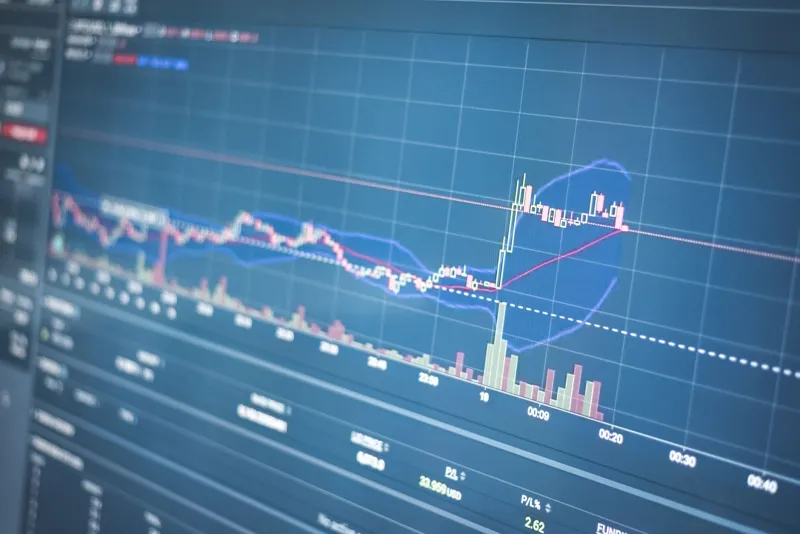
DeFi or Your Brokerage Account? A Candid Comparison for the Everyday American Investor
For most Americans, investing begins with a brokerage account. Whether it is a Fidelity IRA, a Schwab taxable account, or a Vanguard 401(k), the architecture of traditional investing is familiar, regulated, and insured to a meaningful degree. Then along came decentralized finance — commonly known as DeFi — promising to eliminate intermediaries, unlock superior yields, and place financial control squarely in the hands of the individual.
The question worth asking in 2025 is not whether DeFi is interesting. It clearly is. The real question is whether it represents a genuine upgrade for the average American investor, a high-risk supplement, or simply an overhyped alternative to infrastructure that already works reasonably well. This analysis takes a balanced look at both options across five dimensions that matter most to everyday investors.
Accessibility: Who Can Actually Use These Platforms?
On paper, DeFi wins this category convincingly. Any individual with an internet connection and a self-custody wallet can access DeFi protocols — no Social Security number required, no credit check, no account approval process. For the estimated 4.5% of American households that remain unbanked, this theoretical openness is genuinely meaningful.
In practice, however, the user experience of DeFi remains a significant barrier. Setting up a non-custodial wallet, navigating gas fees, understanding slippage tolerances, and managing seed phrase security demands a level of technical literacy that most retail investors do not currently possess. Traditional brokerages, by contrast, have invested decades in building intuitive interfaces, mobile applications, and customer service infrastructure that accommodate a wide range of financial sophistication.
For the everyday American investor — particularly those accustomed to the polished experience of platforms like Robinhood or Charles Schwab — DeFi's accessibility advantage is largely theoretical until its interfaces mature considerably.
Fees: The True Cost of Each Approach
This is an area where the comparison is more nuanced than DeFi proponents often acknowledge. Traditional brokerages have largely eliminated commission fees on stock and ETF trades, and expense ratios on index funds have compressed to near zero at major providers. For a passive investor holding a diversified portfolio of low-cost funds, the fee burden at a conventional brokerage is remarkably low.
DeFi protocols, by contrast, impose costs that vary significantly depending on network conditions. Ethereum-based transactions can carry gas fees ranging from a few dollars to over $50 during periods of network congestion. Liquidity provider fees, protocol fees, and the implicit cost of price impact on lower-liquidity pools all add up in ways that are not always transparent to new users.
That said, for certain specific activities — particularly cross-border transfers or accessing yield products unavailable in traditional markets — DeFi's fee structure can be competitive or even advantageous. The honest assessment is that fees favor traditional brokerages for most standard investment activities, while DeFi may offer cost efficiencies in specialized use cases.
Yield Potential: Where the Numbers Get Interesting
This is where DeFi's appeal becomes hardest to dismiss. At the time of writing, money market funds at major US brokerages yield approximately 4–5% annually — a figure that reflects the current interest rate environment rather than any structural advantage of traditional finance. DeFi protocols, particularly those offering liquidity provision or lending on platforms like Aave, Compound, or Uniswap, have historically offered yields that exceed traditional alternatives by a meaningful margin.
However, those elevated yields carry corresponding risks that are often underappreciated by investors new to the space. Impermanent loss can erode returns for liquidity providers when asset prices diverge. Smart contract vulnerabilities can result in total loss of deposited funds. Protocol governance changes can alter yield structures without warning. And unlike the FDIC-insured deposits or SEC-regulated products available through traditional brokerages, DeFi yields carry no institutional backstop whatsoever.
The yield advantage is real — but it is compensation for genuine risk, not a free lunch. Investors who treat DeFi yields as equivalent to a high-yield savings account are making a category error that can prove costly.
Regulatory Protections: Understanding What You Are — and Are Not — Covered By
For American investors, this dimension may ultimately be the most consequential. Traditional brokerage accounts benefit from a layered regulatory framework that includes SEC oversight, FINRA membership requirements, and SIPC protection of up to $500,000 per account in the event of brokerage insolvency. Bank deposits held in brokerage cash accounts are often additionally FDIC-insured up to $250,000.
DeFi operates entirely outside this framework. There is no regulatory body overseeing protocol governance, no insurance fund protecting depositors, and no legal recourse if a smart contract exploit drains your wallet. The SEC has signaled increasing interest in DeFi regulation, and the coming years will likely bring greater oversight — but as of now, American investors in DeFi bear the full weight of platform risk themselves.
This is not an argument against DeFi participation. It is an argument for approaching it with the same sober awareness that one would apply to any uninsured, unregulated financial instrument.
Risk Profile: Matching the Tool to the Investor
Perhaps the most useful way to frame this comparison is through the lens of investor profiles rather than absolute judgments about which system is superior.
For a risk-averse investor focused on retirement savings, capital preservation, and regulatory clarity, a traditional brokerage account remains the more appropriate primary vehicle. The infrastructure, protections, and tax-advantaged account structures available through established US brokerages are difficult to replicate in DeFi.
For an experienced investor with an existing foundation of traditional holdings, DeFi can serve as a high-risk, high-potential allocation — perhaps 5–15% of a portfolio — that provides exposure to yield opportunities unavailable in conventional markets.
For a technically proficient investor who understands smart contract risk, wallet security, and on-chain mechanics, DeFi opens a genuinely differentiated set of financial tools that traditional institutions cannot yet match.
The either/or framing of this debate is ultimately a false one. The most practical approach for most American investors in 2025 is a deliberate combination: use traditional brokerages as the stable foundation and regulated core of a portfolio, and engage with DeFi selectively — and only with capital whose potential loss would not alter your financial trajectory.
The Bottom Line
DeFi is not a replacement for your Fidelity account. Neither is your Fidelity account a reason to ignore DeFi entirely. Both systems have distinct strengths, and both carry risks that deserve honest acknowledgment rather than partisan advocacy.
What the everyday American investor needs most is not a declaration of which system wins — it is a clear-eyed understanding of what each system actually offers, and the discipline to allocate accordingly. That is precisely the kind of analytical framework that separates informed participation from speculative noise.