Crypto's Casualty List: Hard Lessons from America's Most Spectacular Altcoin Failures
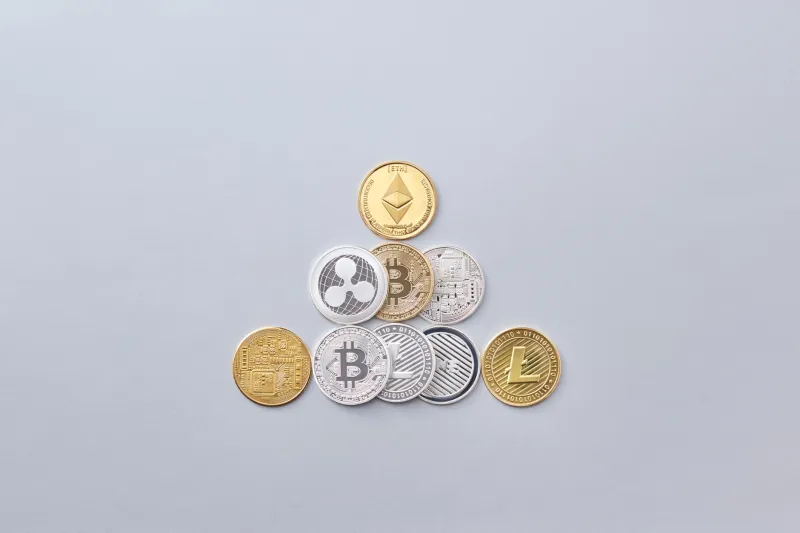
Crypto's Casualty List: Hard Lessons from America's Most Spectacular Altcoin Failures
For every Bitcoin success story circulating at American dinner tables, there are dozens of quieter tragedies — projects that raised tens of millions of dollars, generated enormous media coverage, and then simply ceased to matter. The altcoin graveyard is not a metaphor. Coinopsy and DeadCoins collectively track thousands of defunct or abandoned cryptocurrency projects, and the rate of failure has never slowed.
The uncomfortable truth is that most of these collapses were not random. They followed recognizable patterns, produced visible warning signs, and were preceded by behaviors that, in hindsight, were almost textbook. The problem is that retail investors — particularly those entering the market during periods of euphoria — rarely have the analytical framework to identify those signals in real time.
This analysis examines several of the most instructive failures in recent US crypto history, extracts the common threads, and translates them into a practical stress-test checklist any investor can apply before allocating capital to a new project.
BitConnect: The Architecture of a Ponzi
No retrospective on altcoin failures is complete without BitConnect. At its peak in late 2017, the platform boasted a market capitalization exceeding $2.6 billion. It promised investors daily returns of up to 1% through a proprietary "trading bot" — a claim that should have triggered immediate skepticism, since consistent daily returns of that magnitude would outperform virtually every institutional fund in existence.
The warning signs were abundant. The team behind BitConnect was largely anonymous. The mechanics of the lending program were never transparently explained. Early participants were financially incentivized to recruit new members, a classic hallmark of pyramid structures. When regulators in Texas and North Carolina issued cease-and-desist orders in January 2018, the platform collapsed within days, wiping out hundreds of millions in investor funds.
The lesson: Extraordinary yield claims demand extraordinary evidence. If a project cannot explain — in plain, verifiable terms — how it generates returns, that opacity is itself a disqualifying factor.
Bitconnect's Structural Twin: The PlusToken Saga
Though PlusToken originated in Asia, it absorbed significant capital from American investors who discovered it through social media and cryptocurrency forums. The scheme ultimately defrauded participants of an estimated $2 billion to $3 billion in cryptocurrency before its operators were arrested in 2019.
PlusToken exhibited the same recruitment-dependent revenue model as BitConnect, layered with a professionally designed app and a veneer of legitimacy that made it more visually convincing to less experienced investors. The project's marketing leaned heavily on endorsements — many fabricated — and created a sense of exclusivity around membership.
The lesson: Polished branding is not a proxy for legitimacy. A well-designed interface and active Telegram community can be manufactured in days. What cannot be manufactured is a verifiable technical foundation, an audited smart contract, and a team with traceable professional histories.
The ICO Era's Most Overpromised Projects
The 2017–2018 initial coin offering boom produced hundreds of projects that raised capital on little more than a whitepaper and a roadmap. Several that achieved significant US investor attention — including Tron's early competitors, various "Ethereum killers," and decentralized exchange tokens — quietly faded after failing to deliver functional products.
A consistent pattern emerged: whitepapers that borrowed technical language without demonstrating genuine engineering depth. Roadmaps with aggressive timelines that were perpetually revised. Development activity on GitHub that was either minimal or consisted primarily of forked code from existing open-source projects with cosmetic modifications.
One particularly instructive case involved projects that structured their token distribution with large allocations reserved for founders and early advisors, subject to vesting schedules that expired conveniently after retail investors had driven prices higher. When insider unlock dates arrived, selling pressure overwhelmed buy-side demand, and prices collapsed — often permanently.
The lesson: Always examine the token distribution schedule. If founders and insiders control a disproportionate share of supply, and their lockup periods are short relative to the project's stated development timeline, the incentive structure is misaligned with retail investor interests.
Terra/LUNA: When Algorithmic Confidence Became Systemic Risk
The May 2022 collapse of the Terra ecosystem erased approximately $40 billion in market value within days and remains one of the most studied failures in cryptocurrency history. TerraUSD (UST) was an algorithmic stablecoin designed to maintain its dollar peg through a mint-and-burn mechanism involving its sister token, LUNA.
The system functioned during normal market conditions. Under sustained selling pressure, it did not. When confidence eroded, the mechanism that was supposed to stabilize UST instead accelerated a death spiral, with LUNA hyperinflating as the protocol desperately attempted to defend the peg.
What made this failure particularly instructive was how many sophisticated investors — not just retail participants — failed to adequately model the tail-risk scenario. The Anchor Protocol's 20% APY on UST deposits attracted enormous capital, and that yield was itself a warning signal that the system's economic sustainability depended on perpetual growth assumptions.
The lesson: Stress-test the failure mode, not just the success case. Any project whose stability depends on continuous demand growth or favorable market conditions deserves scrutiny under adversarial assumptions. Ask: what happens when sentiment reverses?
A Practical Pre-Investment Checklist
Drawing from these failures and dozens of smaller collapses, the following checklist represents a minimum due-diligence standard for US investors evaluating any new altcoin or crypto project:
Team Verification
- Are the founders and core developers publicly identified, with verifiable professional histories?
- Have any team members been associated with previous failed or fraudulent projects?
Technical Foundation
- Is there an active, substantive GitHub repository with genuine development history?
- Has the smart contract or core protocol been independently audited by a reputable firm?
Token Economics
- What percentage of total supply do insiders and early investors control?
- When do founder and advisor lockup periods expire relative to public sale timelines?
Revenue Model
- Can the project articulate a clear, plausible mechanism for generating value — one that does not depend solely on new investor inflows?
- Are yield or return promises quantified, and are those figures economically coherent?
Regulatory Posture
- Has the project sought legal counsel regarding US securities law compliance?
- Is the token explicitly excluded from US investor participation, and if so, why?
Community and Communication
- Is the project's communication transparent about setbacks and delays, or does it exclusively promote positive developments?
- Are critical voices in the community engaged constructively, or systematically suppressed?
The Informed Investor's Advantage
Crypto's history is not merely a cautionary tale — it is a curriculum. Every major failure has produced documented evidence of the specific conditions that preceded it, and that evidence is publicly available to any investor willing to study it.
The projects that will fail next year are not yet identifiable by name. But the patterns they will exhibit — inflated promises, opaque team structures, misaligned tokenomics, and unsustainable yield mechanisms — are already well-established. Investors who internalize those patterns before the next cycle of hype arrives will be positioned not just to avoid the losses, but to allocate capital with greater confidence toward the projects that may actually endure.
At Best Crypto Experts, we believe the most valuable edge in this market is not a hot tip or a price target. It is the disciplined application of hard-won analytical frameworks to every investment decision, regardless of how compelling the narrative may appear.