Anatomy of a Crypto Pump-and-Dump: How to Recognize Coordinated Manipulation Before It Costs You
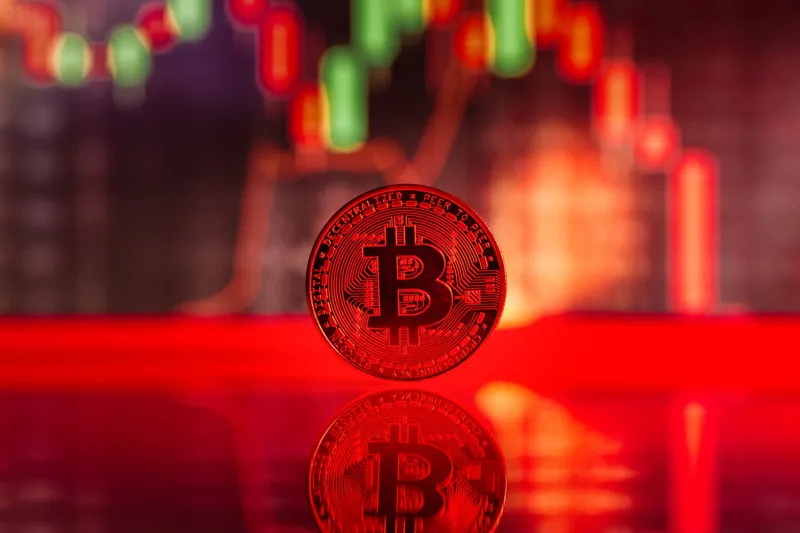
Every experienced crypto analyst has watched it unfold at least once: a relatively obscure token surges 400% in 48 hours, social media erupts with breathless predictions of further gains, and then — almost without warning — the price collapses back to earth, leaving a trail of retail investors holding nearly worthless positions. The orchestrators, meanwhile, have already cashed out.
This is the pump-and-dump scheme, and while regulators have pursued versions of it in traditional securities markets for decades, the decentralized and largely unregulated nature of cryptocurrency has made it both easier to execute and harder to prosecute. For American investors navigating today's digital asset landscape, understanding how these schemes work is not optional — it is a fundamental survival skill.
What a Pump-and-Dump Actually Looks Like
At its core, a crypto pump-and-dump follows a predictable structure. A coordinating group — sometimes a private Telegram channel, sometimes a network of influencers operating under revenue-sharing agreements — accumulates a low-liquidity token quietly over days or weeks. Because the token trades thin volume, even modest buying pressure can move the price meaningfully.
Once the group has established a sufficient position, the promotional phase begins. Coordinated messaging floods social platforms: Twitter threads proclaiming a "hidden gem," Reddit posts citing a fictional partnership, Discord servers issuing buy alerts with countdown timers. The goal is to manufacture urgency and attract retail buyers whose fresh capital pushes the price higher still.
When the price reaches a target threshold — or when organic buying begins to slow — the coordinating group sells en masse. This is the dump. The exit happens rapidly, often within hours, and the price chart collapses in a near-vertical line. The retail investors who entered late, seduced by momentum and social proof, are now holding an asset worth a fraction of what they paid.
In crypto circles, these latecomers are called "exit liquidity" — a blunt term that accurately describes their function in the scheme.
Historical Cases Worth Studying
The 2017–2018 bull cycle produced a remarkable number of documented pump-and-dump events. BitConnect, though more accurately described as a Ponzi scheme with pump-and-dump characteristics, demonstrated how aggressively social media promotion could sustain an unsustainable price trajectory before a catastrophic collapse. Countless smaller tokens during that same period — many launched on exchanges with minimal listing requirements — followed the same pattern at a smaller scale.
More recently, the 2021 meme coin frenzy provided fresh case studies. Numerous tokens inspired by internet culture saw price appreciation measured in thousands of percent over days, only to surrender nearly all gains within weeks. The Squid Game token, which prevented holders from selling through a technical mechanism called an anti-dump function, represented an extreme variant: a rug pull that shared DNA with the pump-and-dump playbook.
These are not ancient history. Variations continue to surface regularly, and the tactics evolve alongside the platforms used to promote them.
On-Chain Signals That Precede Manipulation
Blockchain data is among the most powerful tools available to an investor trying to distinguish genuine momentum from manufactured price action. Before committing capital to any rapidly appreciating token, consider examining the following on-chain indicators.
Wallet concentration. Use a block explorer to examine the top holders of a token. If a small number of wallets — say, ten addresses — control 40% or more of the circulating supply, the conditions for coordinated selling exist. Legitimate projects with broad community adoption tend to show more distributed ownership.
Transaction history of large holders. When did the top wallets acquire their positions? If a cluster of wallets accumulated heavily in the days immediately before a price surge, that timing warrants serious scrutiny.
Liquidity pool depth. For tokens traded on decentralized exchanges, examine the depth of the liquidity pool. A shallow pool means that relatively small sell orders can collapse the price dramatically — which is precisely the environment pump-and-dump operators prefer.
Token age and contract activity. Tokens deployed within days or weeks of a price surge, particularly those with minimal prior transaction history, should be approached with significant caution.
Social Media Red Flags
The promotional phase of a pump-and-dump is often the most visible part of the operation, and it leaves recognizable patterns.
Be skeptical of influencer accounts that suddenly pivot to promoting an obscure token with no prior coverage of that project. Examine whether those accounts have a history of promoting tokens that subsequently collapsed. The term "paid promotion" does not always appear in disclosures, even when legally required.
Coordinated posting — where multiple accounts use nearly identical language, hashtags, or price targets within a short time window — is a strong indicator of an organized campaign rather than organic enthusiasm. Tools that analyze social media posting patterns can help surface this kind of coordination.
Urgency language is another reliable signal. Phrases like "last chance," "this is going 10x by Friday," or "don't miss the window" are designed to override deliberate thinking and trigger impulsive buying. Legitimate investment opportunities do not typically disappear in 72 hours.
Volume Anomalies and Exchange Context
Trading volume is one of the first numbers an investor sees, and it is one of the most easily manipulated. Wash trading — where a coordinating group buys and sells between its own wallets to inflate apparent volume — is common in lower-tier exchanges with limited surveillance.
When evaluating a volume spike, consider where the volume is occurring. A token recording 90% of its volume on a single obscure exchange, while showing minimal activity on major platforms, may be benefiting from artificial inflation. Cross-referencing volume data across multiple sources can help reveal discrepancies.
Also examine the volume-to-market-cap ratio. A token with a $5 million market cap recording $50 million in daily volume is exhibiting a ratio that warrants explanation. Genuine organic demand rarely produces such extreme figures.
A Practical Checklist Before You Commit Capital
When you encounter a rapidly appreciating token, run through the following questions before making any purchase decision.
- Who holds the supply? Check wallet concentration on a block explorer.
- When did large holders accumulate? Look for pre-surge accumulation patterns.
- What is the liquidity depth? Assess whether selling pressure could collapse the price quickly.
- Where is the volume concentrated? Verify across multiple exchanges and data sources.
- What is driving the narrative? Identify whether promotion is organic or coordinated.
- Does the project have verifiable fundamentals? Examine the white paper, team credentials, and development activity.
- Is urgency language present? Treat time pressure as a manipulation signal, not a reason to act faster.
No single indicator is definitive. The value of this checklist lies in evaluating multiple factors together. When several signals align simultaneously, the risk profile of a trade changes substantially.
Thinking Like an Analyst, Not a Victim
The investors who consistently avoid pump-and-dump losses share a common trait: they approach price surges with professional skepticism rather than emotional excitement. They ask who benefits from their purchase and what the exit looks like before they enter a position.
The cryptocurrency market rewards disciplined, informed participants and extracts capital from those who substitute enthusiasm for analysis. Understanding the mechanics of market manipulation is not pessimism — it is a prerequisite for protecting and growing your portfolio in an environment where such tactics remain widespread.
At Best Crypto Experts, our commitment is to ensure that American investors have the analytical frameworks to make decisions grounded in evidence rather than manufactured momentum. The pump-and-dump will always find new victims. With the right preparation, you do not have to be one of them.