Trade Smarter, Not Harder: The Systematic Tools Professional Crypto Traders Use to Stay Ahead Without Losing Sleep
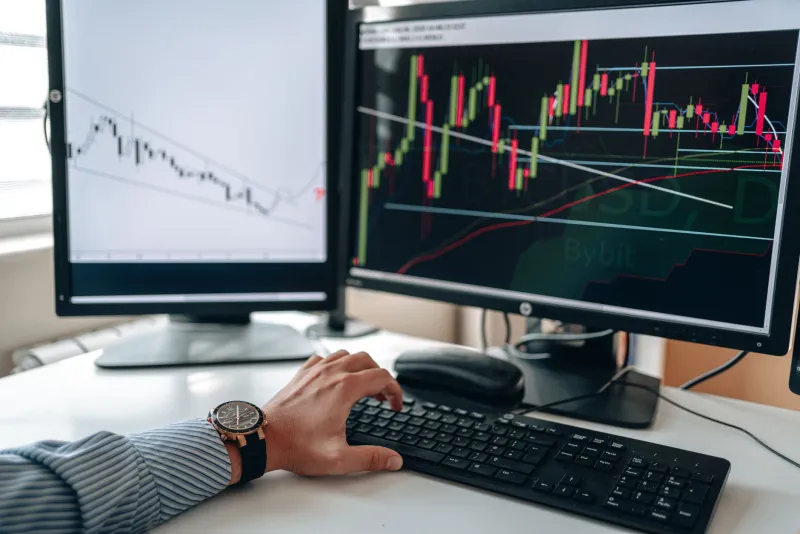
Cryptocurrency markets never close. At 3:00 a.m. on a Tuesday, while most retail investors are either asleep or anxiously refreshing their phones, a well-structured trade can execute, a stop-loss can trigger, or a breakout alert can fire — all without a single human intervention. This is not the future of trading; it is the present reality for professionals who have learned to separate themselves from the chaos.
The distinguishing characteristic of experienced crypto traders is not superior chart-reading ability or an uncanny knack for timing the market. It is mechanical discipline — the consistent application of tools and systems that enforce pre-defined rules regardless of how the market feels in any given moment. For US investors looking to elevate their approach, understanding how professionals structure these systems is one of the most valuable education investments they can make.
Why Emotion Is the Retail Investor's Greatest Liability
Before examining the tools themselves, it is worth understanding the problem they solve. Cryptocurrency markets are uniquely susceptible to emotional decision-making. The volatility is extreme, the news cycle is relentless, and social media amplifies both euphoria and panic in real time. Retail investors frequently buy after a significant price surge — driven by fear of missing out — and sell during sharp corrections, driven by fear of further losses. Both behaviors consistently erode returns.
Professional traders are not immune to these emotions. The difference is that they have deliberately constructed systems that make emotional trading structurally difficult. When your entry and exit conditions are pre-programmed, the impulse to deviate becomes irrelevant. The system executes. You review the results.
Limit Orders: The Foundation of Disciplined Execution
The limit order is perhaps the most underutilized tool in the retail investor's arsenal. Unlike a market order — which executes immediately at whatever price is currently available — a limit order instructs the exchange to buy or sell only at a specific price or better. This single distinction carries enormous practical consequences.
Consider a scenario in which Bitcoin is trading at $68,000 and a trader believes meaningful support exists at $64,500. Rather than watching the chart and attempting to click "buy" at precisely the right moment, the trader places a limit buy order at $64,500 and walks away. If the price reaches that level, the order fills automatically. If it does not, no trade occurs. The trader has effectively removed themselves from the equation.
On the sell side, limit orders function as profit targets. A trader holding Ethereum at $3,200 who targets $3,800 as a resistance level can place a limit sell order at that price and let the market do the work. Major US exchanges including Coinbase Advanced Trade, Kraken, and Gemini all support limit orders with straightforward interfaces. Binance.US offers additional order types for more advanced configurations.
The practical setup recommendation for most investors is to identify key support and resistance levels through basic technical analysis, then place limit orders at those levels rather than monitoring prices in real time. This approach enforces entry and exit discipline while freeing significant mental bandwidth.
Stop-Loss and Stop-Limit Orders: Protecting Capital While You Sleep
If limit orders represent the offensive component of a systematic trading approach, stop-loss orders are the defensive backbone. A stop-loss order automatically triggers a sell when an asset drops to a specified price, capping the downside on any given position.
Professional traders typically configure stop-losses as a standard percentage below their entry price — commonly between five and fifteen percent depending on the asset's volatility and the trader's risk tolerance. This percentage is determined before the trade is placed, not reactively during a drawdown when emotions are running high.
A more sophisticated variant is the stop-limit order, which combines a stop trigger with a limit execution price. When the stop price is reached, a limit sell order is placed rather than a market order. This prevents the order from filling at an unexpectedly poor price during a flash crash — an important consideration in crypto markets where brief, extreme volatility can cause market orders to execute far below intended levels.
One practical note for US investors: not all exchanges handle stop orders identically, and some may not guarantee execution during periods of extreme illiquidity. Understanding the specific mechanics of your chosen platform before relying on these tools is essential.
Price Alerts: The Early Warning System
Automated execution tools handle the trades themselves, but price alerts serve a different and equally important function — they notify traders when conditions worth evaluating have emerged, without forcing an immediate action.
Platforms such as TradingView, which is widely used among professional traders in the US, allow users to configure alerts based on price levels, indicator crossovers, volume thresholds, and dozens of other conditions. An alert might fire when Bitcoin crosses above its 200-day moving average, when a specific altcoin reaches a predetermined resistance level, or when trading volume spikes beyond a set threshold.
The discipline here lies in how alerts are used. Effective traders configure alerts to prompt a structured review — not a reflexive trade. When an alert fires, the professional trader consults their pre-written trading plan for that asset, evaluates whether conditions still support the intended action, and then executes or stands aside based on that assessment. The alert initiates a process; it does not override one.
Automation Platforms and Bots: Advanced Systematic Trading
For investors prepared to move beyond manual order placement, automated trading platforms offer a more comprehensive layer of systematic execution. Tools such as 3Commas and Pionex allow users to configure rule-based trading bots that can manage entries, exits, and position sizing according to pre-defined parameters.
A common implementation is the grid trading bot, which automatically places buy and sell orders at regular price intervals within a defined range. This approach is particularly effective in sideways or range-bound markets, generating incremental returns without requiring any manual intervention once the parameters are set.
Dollar-cost averaging bots represent another practical option for long-term US investors. These tools automatically purchase a fixed dollar amount of a specified asset on a regular schedule — daily, weekly, or monthly — regardless of price. The result is a systematic accumulation strategy that sidesteps the psychological burden of timing the market entirely.
It is worth noting that automation introduces its own risks. Bots executing in a rapidly trending market without appropriate safeguards can generate significant losses. Any automated system should be configured with hard stop conditions and reviewed regularly to ensure it remains aligned with current market conditions and the investor's broader objectives.
Building Your Own Systematic Framework
The professionals discussed throughout this article do not rely on any single tool in isolation. Their edge comes from the integration of these components into a coherent, documented framework. Before placing a trade, they have defined their entry criteria, their target, their stop-loss level, and their position size. The tools then execute that plan faithfully.
For US investors ready to adopt a more disciplined approach, the starting point is straightforward: document your trading rules before your next trade. Define the conditions under which you will enter a position, the price at which you will exit for a profit, and the price at which you will cut your losses. Then use limit orders and stop-loss orders to enforce those rules automatically.
The goal is not to eliminate human judgment from the process — it is to apply that judgment at the planning stage, where it is most valuable, and then let your systems handle execution. That is how professional traders sleep at night while their capital continues to work.
Best Crypto Experts provides educational content and analysis for informational purposes only. Nothing published here constitutes financial or investment advice. Always conduct your own due diligence before making any investment decision.