Tunnel Vision: How Deep Crypto Specialization Leaves Analysts Blind to the Forces That Actually Move Prices

The Paradox of Expertise in Crypto Markets
There is a persistent assumption in financial markets that the most knowledgeable person in the room is the most valuable. In crypto, this assumption is not merely questionable—it can be actively dangerous. The analyst who has spent three years dissecting the tokenomics of a layer-two protocol, or who can recite every validator detail of a proof-of-stake network from memory, may simultaneously be the worst-positioned person to tell you what happens to that asset when the Federal Reserve signals a rate shift or when geopolitical tensions tighten global liquidity.
This is not a character flaw. It is a structural consequence of how expertise develops. Deep specialization demands focused attention, and focused attention is, by definition, narrow. The problem is that crypto markets do not reward narrow attention. They reward the investor who understands when macroeconomic forces will override every protocol-level signal a specialist can produce.
When the Macro Tide Turns, Protocol Knowledge Becomes Irrelevant
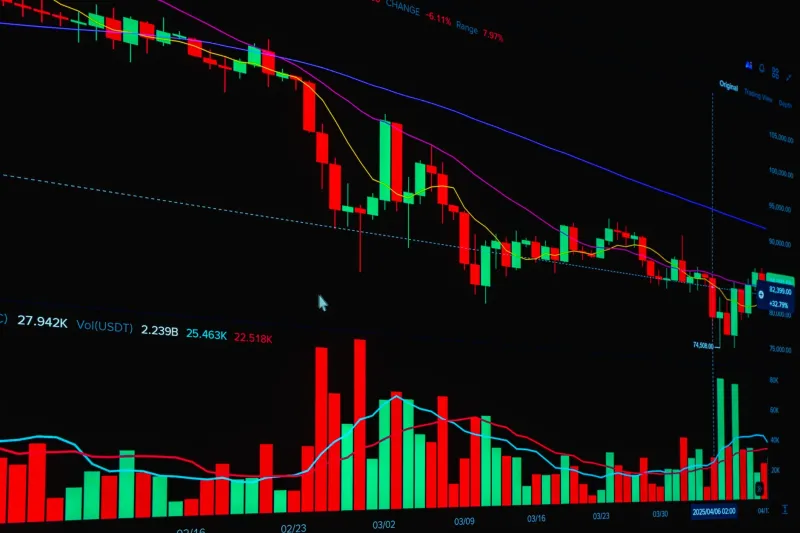
Consider the events of 2022. In the months preceding the broad crypto market collapse, numerous well-regarded analysts with genuine technical credentials were publishing detailed assessments of individual blockchain ecosystems—transaction throughput improvements, developer activity metrics, ecosystem grant programs, and partnership announcements. The analysis was often technically sound. It was also almost entirely beside the point.
What drove the collapse was not a failure of any specific protocol. It was the Federal Reserve's most aggressive interest rate hiking cycle in four decades, combined with a flight from risk assets across every major asset class. Investors who were watching Federal Open Market Committee minutes and monitoring real yields were better positioned than anyone reading on-chain data. The macro signal was louder than every technical indicator, yet specialists were often the last to acknowledge it because their entire analytical framework was built around protocol-level inputs.
Similarly, in early 2020, the COVID-19 shock produced a correlation event that erased distinctions between asset classes. Bitcoin, widely discussed as an uncorrelated store of value, sold off alongside equities, commodities, and high-yield debt in a matter of days. Analysts deeply embedded in the Bitcoin narrative were caught flat-footed. Those monitoring cross-market correlations and historical behavior during liquidity crises were not.
The Geopolitical Dimension Specialists Routinely Underestimate
Beyond monetary policy, geopolitical developments represent another category of macro signal that protocol specialists consistently underweight. The imposition of sanctions, shifts in US-China trade relations, and regulatory postures adopted by major economies all carry direct implications for crypto markets—particularly for assets whose mining infrastructure, exchange volume, or developer talent is concentrated in specific geographies.
A specialist focused on the technical merits of a particular smart contract platform may be entirely correct about its architectural superiority. That assessment tells you very little about how the asset performs when a major government moves to restrict crypto transactions, when a sanctions regime disrupts exchange access, or when a geopolitical shock triggers broad deleveraging.
US investors are particularly exposed to this blind spot because the domestic regulatory environment is itself a macro variable. Legislative developments in Washington, enforcement actions from the Securities and Exchange Commission, and Treasury Department guidance all function as macro-level inputs that can reshape entire asset categories overnight—regardless of what any individual protocol's fundamentals suggest.
Cross-Market Correlations: The Signal Specialists Don't Track
One of the more instructive analytical exercises for any crypto investor is to map the correlation between Bitcoin and the Nasdaq 100 across different market regimes. During periods of risk appetite, the relationship is often close. During acute stress, it tightens further. During genuine risk-off environments, crypto tends to behave like the highest-beta expression of risk sentiment in the market—not like digital gold, not like a hedge, but like a leveraged bet on the continuation of speculative appetite.
This is information that emerges from cross-market analysis, not from studying any blockchain's technical roadmap. The specialist who has never developed fluency in reading equity market breadth indicators, credit spreads, or dollar strength trends is working with an incomplete picture—not because protocol knowledge is worthless, but because protocol knowledge alone cannot explain why correlated assets move together when they do.
A Framework for Maintaining Strategic Distance
The solution is not to abandon technical expertise. It is to build a deliberate practice of stepping back from it at regular intervals. Several disciplines support this.
Scheduled macro reviews. At minimum on a monthly basis, serious investors should review Federal Reserve communications, US Treasury yield movements, dollar index trends, and equity market conditions before reviewing any crypto-specific data. This sequencing matters. It establishes the macro context before the protocol-level noise can distort the picture.
Correlation monitoring. Tracking rolling 30-day and 90-day correlations between major crypto assets and risk benchmarks like the Nasdaq 100 and the S&P 500 provides ongoing visibility into whether crypto is behaving as an independent asset class or as a leveraged proxy for broader sentiment.
Adversarial reading. Actively seeking out analysis from economists, macro strategists, and geopolitical analysts who have no crypto-specific agenda forces exposure to frameworks that specialists rarely encounter. The investor who reads both a blockchain developer's protocol update and a Federal Reserve research paper on digital assets is better equipped than the one who reads only the former.
Position sizing discipline. When macro signals are ambiguous or unfavorable, even technically compelling assets should carry reduced position sizes. The strength of a protocol argument is not a counterargument to macro risk.
What This Means for How You Consume Expert Analysis
For US investors who rely on expert commentary to inform decisions, this dynamic has a direct practical implication: the credentials that make an analyst authoritative on protocol-specific questions are not the same credentials that make them reliable on market timing or macro risk.
When evaluating any expert's market call, ask explicitly whether they have demonstrated fluency in macroeconomic analysis, not just blockchain technology. Ask whether their track record includes calls made during macro-driven market events—not just during periods when protocol fundamentals were the primary driver of returns.
The most valuable analytical voice is not the deepest specialist. It is the analyst who knows exactly when their specialty is relevant and when it is not. That kind of self-awareness is rarer than technical knowledge, and in crypto markets, it is considerably more valuable.